
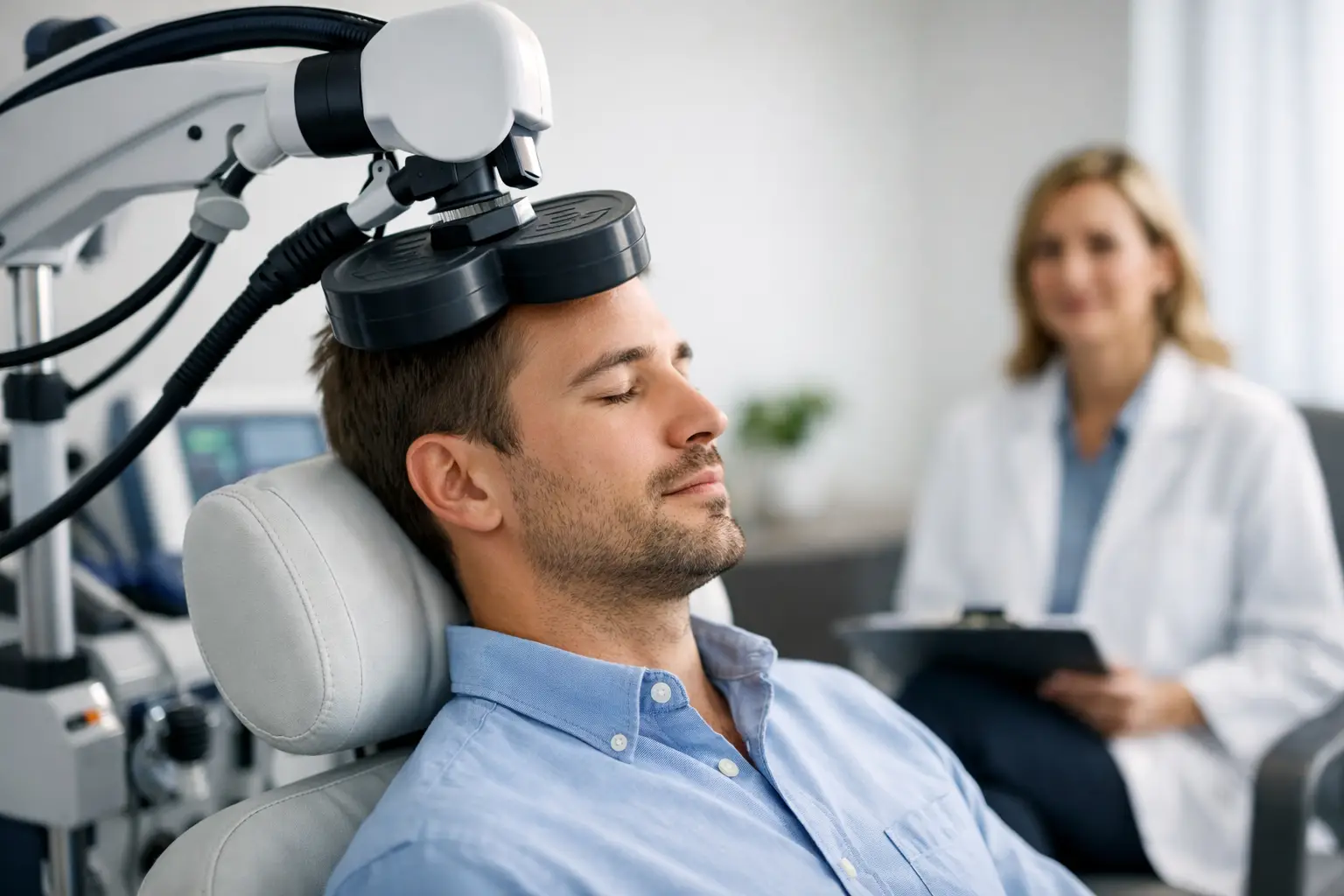
You may be asking when is TMS recommended because medication has not helped enough, side effects have become hard to tolerate, or depression keeps returning even with consistent treatment. That question usually comes up after real effort – therapy sessions, medication trials, lifestyle changes, and still not enough relief. At that point, it makes sense to look at whether a different kind of treatment could fit your needs.
Transcranial Magnetic Stimulation, or TMS, is a noninvasive treatment that uses magnetic pulses to stimulate specific areas of the brain involved in mood regulation. It does not require surgery, sedation, or a hospital stay. For many people, the appeal is straightforward: TMS offers another option when depression has not responded well to more traditional approaches.
When is TMS recommended?
TMS is most often recommended for adults with major depressive disorder who have not improved enough with antidepressant medication. In many cases, that means a person has tried at least one or two medications at an adequate dose and duration without getting meaningful symptom relief. Sometimes the issue is not that medication did nothing, but that the improvement was partial and daily functioning is still suffering.
It may also be recommended when medication side effects are a major barrier. Some people stop or avoid antidepressants because of weight changes, sexual side effects, fatigue, nausea, or emotional blunting. If a treatment is technically available but not realistically tolerable, that matters. A good psychiatric evaluation looks at both effectiveness and quality of life.
TMS can also be appropriate for people who want a treatment plan that goes beyond medication alone. Depression is rarely one-size-fits-all. Some patients do best with therapy and psychiatry together. Others benefit from adding an interventional treatment like TMS while continuing counseling, medication management, or both.
The clinical situations that often lead to TMS
Doctors do not recommend TMS just because someone feels down or overwhelmed. The decision is usually based on the severity, duration, and treatment history of depression. If symptoms are persistent, interfere with work, school, relationships, sleep, motivation, or self-care, and have not responded adequately to standard treatment, TMS becomes a more relevant conversation.
A common scenario is treatment-resistant depression. This term generally means depression that has not improved after trying appropriate antidepressant treatment. The exact threshold can vary by insurer or provider, but the larger point is the same: the depression has been actively treated, and the response has been limited.
Another situation is recurrent depression. Some people get better for a period of time, then experience another depressive episode despite prior care. If this cycle keeps happening, a psychiatrist may consider whether TMS could help reduce symptom burden and support a more stable recovery.
TMS may also come up when depression is severe enough that waiting through one more medication trial feels discouraging or impractical. That does not mean every severe case goes straight to TMS, but it can shift the discussion. A thoughtful provider will weigh urgency, past response patterns, side effect history, and overall functioning before making a recommendation.
Who may be a good candidate when TMS is recommended?
In general, good candidates are adults with depression who have a clear diagnosis, a history of limited benefit from medication, and the ability to attend a course of treatment consistently. TMS is usually delivered over several weeks, so reliability and scheduling matter.
People often do well with TMS when they want a treatment that does not involve systemic medication side effects and when they are open to a structured treatment process. During treatment, patients remain awake and can typically return to normal daily activities afterward. That makes TMS appealing for people who need to keep working, parenting, studying, or managing other responsibilities.
That said, candidacy is never based on one factor alone. Mental health providers also look at medical history, psychiatric history, current symptoms, and safety considerations. For example, some patients may need a different level of care first if they are in acute crisis. Others may need a more integrated plan that includes therapy, medication management, and support for trauma, anxiety, or substance use in addition to depression treatment.
When TMS may not be the first step
TMS is promising, but it is not automatically the first recommendation for every person with depression. If someone has never tried evidence-based talk therapy or has not had an adequate medication trial, those may still be reasonable first steps depending on the situation. Many people improve with psychotherapy, medication, or a combination of both.
There are also practical and medical reasons to slow down and evaluate carefully. TMS may not be suitable for individuals with certain metal implants near the head or other specific contraindications. Insurance approval can also depend on documented treatment history, diagnosis, and prior medication trials. That does not mean access is impossible, but it does mean the recommendation process should be thorough.
It is also worth saying that depression is not always the only issue present. Anxiety, PTSD, trauma history, ADHD, and substance use can all shape what treatment should look like. Sometimes TMS is part of the answer. Sometimes the first priority is stabilizing another concern so depression treatment can be more effective.
How providers decide when TMS is recommended for you
A strong recommendation for TMS should come after a careful assessment, not a quick sales pitch. Providers typically review your diagnosis, symptom severity, medication history, therapy history, medical conditions, and treatment goals. They also ask practical questions: Can you attend regular sessions? What symptoms are most disruptive right now? What has helped even a little, and what has made things worse?
This is where personalized care matters. Two people can both have depression and still need very different plans. One may be a strong TMS candidate after multiple medication failures. Another may need medication management adjusted, trauma-focused therapy added, or closer psychiatric monitoring before considering TMS.
At a practice that offers counseling, psychiatry, and TMS in one setting, those decisions can be more coordinated. Instead of treating each part of care separately, your providers can look at the full picture – symptoms, progress, barriers, and next steps. That kind of integrated planning often leads to clearer recommendations and a treatment plan that feels more manageable.
What treatment with TMS is actually like
One reason patients ask about TMS later in their care journey is that they assume it will be intense or disruptive. In reality, the process is more routine than many people expect. Sessions are performed in an outpatient setting. You stay awake, there is no anesthesia, and you can usually drive yourself to and from treatment.
During a session, a magnetic coil is placed against the scalp to deliver targeted pulses. Some people notice tapping sensations on the head and mild discomfort early on, though this often becomes easier as treatment continues. The schedule is more demanding than taking a pill at home, but the trade-off is that many patients appreciate having a treatment option that does not affect the whole body in the same way medication can.
Results also take time. TMS is not an overnight fix. Some people begin to notice improvement within a few weeks, while others experience more gradual change over the course of treatment. Expectations should be hopeful but realistic. The goal is meaningful symptom improvement, better functioning, and a stronger foundation for ongoing recovery.
Questions to ask if you are considering TMS
If you are wondering whether TMS fits your situation, it helps to ask direct questions. Has your depression had an adequate response to medication? Are side effects limiting your ability to stay on treatment? Have therapy and medication together still left you struggling? Would an outpatient treatment course be realistic with your schedule and responsibilities?
You can also ask what your provider believes TMS would add to your current plan. That question matters because TMS works best when it is recommended with intention, not simply offered because it is available. The best care is built around your symptoms, history, preferences, and goals.
For people across Arizona who want options beyond medication alone, this conversation can be an important turning point. At Strategies for Success, patients often benefit from having therapy, psychiatric care, and TMS considered together rather than as disconnected pieces.
If depression has continued to interfere with your life despite real effort, asking whether TMS is recommended is not giving up on treatment – it is moving toward a more tailored one.