
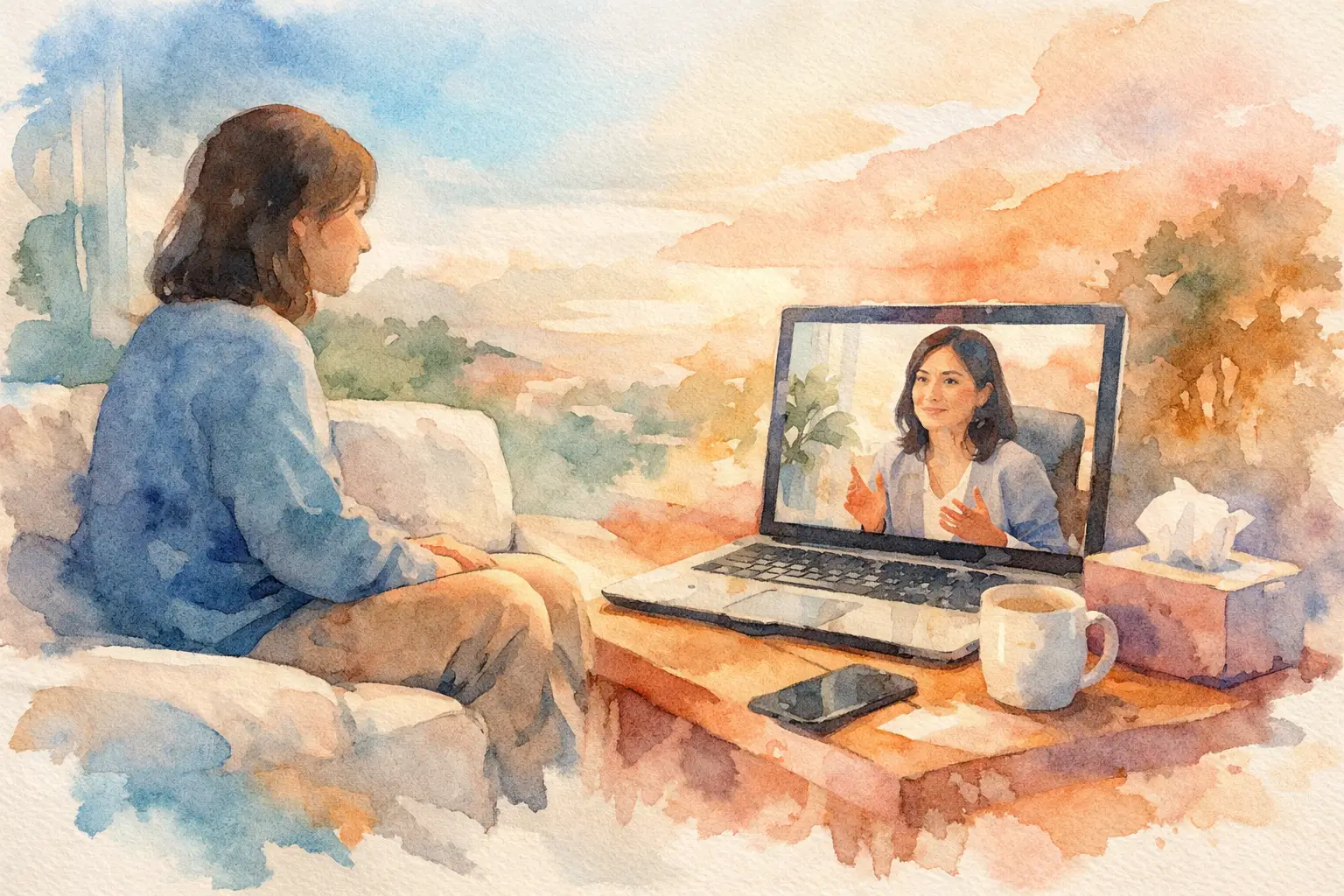
Some people put off therapy for months because the logistics feel harder than the emotions. Between work, school pickup, traffic, and finding a provider who takes your insurance, getting support can start to feel like one more stressful task. That is why many people want to understand how telehealth therapy works before they schedule a first appointment. When it is done well, virtual care can make therapy more accessible without lowering the quality of care.
How telehealth therapy works from the first appointment
Telehealth therapy is mental health care provided through a secure video platform, and sometimes by phone when clinically appropriate. Instead of driving to an office, you meet with your therapist from home, work, or another private space. The core parts of therapy stay the same: you talk with a licensed provider, discuss symptoms and goals, build coping skills, and follow a treatment plan designed around your needs.
The process usually starts the same way in-person care does. You request an appointment, complete intake forms, verify insurance or payment details, and share basic information about what brings you in. If you are seeking help for anxiety, depression, trauma, ADHD, PTSD, or substance use concerns, those details help the clinical team match you with the right level of care.
At the first session, your therapist will ask questions about your symptoms, stressors, health history, family background, and daily functioning. If you are a parent seeking care for a child or teen, part of the visit may include your perspective as well as time with the child, depending on age and treatment goals. From there, therapy becomes a structured, ongoing process rather than a single conversation.
What happens during a virtual therapy session
A telehealth session often feels more normal than people expect. You log in through a secure platform, your therapist confirms that you can hear and see each other clearly, and the session begins much like it would in an office. You might talk through a difficult week, practice grounding skills, identify unhelpful thought patterns, or work on a specific treatment approach such as CBT, DBT, or trauma-focused care.
Your therapist may also check in on practical details that support safety and privacy. They may confirm your current location at the start of the session in case emergency support is ever needed. They may ask whether you are in a private place where you can speak openly. These steps are not formalities. They are part of responsible mental health care.
For many patients, virtual sessions can make it easier to be consistent. You do not have to factor in a commute, sit in a waiting room, or rearrange your day as dramatically. That convenience matters because therapy works best when people can show up regularly enough to build trust and momentum.
What telehealth can treat well
Telehealth therapy can be effective for a wide range of concerns. Many adults, teens, and families use virtual care for anxiety, depression, stress, grief, adjustment issues, relationship strain, trauma, and PTSD. It can also support ADHD treatment, especially when therapy is part of a broader plan that may include behavioral strategies, school support, or psychiatric care.
If your treatment includes evidence-based approaches like CBT or DBT, telehealth often translates very well. These models rely on conversation, reflection, skills practice, and tracking patterns over time, all of which can be done effectively in a virtual format. Some trauma treatments can also be offered through telehealth, though the right fit depends on the person, symptom severity, and home environment.
For patients who need more than talk therapy alone, integrated care matters. A practice that offers both therapy and psychiatry can coordinate medication management with counseling, which often reduces confusion and helps treatment move forward more efficiently. That is especially helpful when symptoms affect several parts of life at once, or when someone has tried one type of care and still needs better symptom relief.
When telehealth therapy may not be the best fit
Virtual care is helpful, but it is not ideal for every situation. If someone is in immediate crisis, having active suicidal intent, experiencing severe psychosis, or needs a higher level of care, telehealth may not be enough on its own. In those cases, an in-person evaluation, crisis intervention, or more intensive treatment may be the safer option.
There are also practical fit issues. Some people do not have a private place to talk. Others feel distracted on video or find it harder to connect emotionally through a screen. Young children may have a limited attention span for virtual sessions, depending on their age and needs. None of that means telehealth failed. It just means the format should match the patient.
A good provider will be honest about that. Mental health care should not be one-size-fits-all. Sometimes the best plan includes telehealth only. Sometimes it includes in-person visits. Sometimes it mixes both.
Privacy, technology, and what you need at home
One of the most common concerns is privacy. Reputable telehealth therapy uses secure, HIPAA-compliant platforms designed to protect your health information. Your therapist should explain how sessions are conducted, what to do if technology fails, and how your records are handled.
Your part is simpler but still important. Try to find a quiet space with a stable internet connection, headphones if needed, and enough privacy to speak honestly. For some people, that is a bedroom or home office. For others, it may be a parked car during a lunch break. The best setup is the one that allows you to be present and candid.
Technology problems do happen. Video may freeze, audio may cut out, or a session may need to switch to phone temporarily. That can be frustrating, but it is usually manageable. If telehealth is part of your ongoing care, those hiccups tend to become easier to handle after the first few sessions.
How telehealth therapy works with psychiatry and medication
Many patients are not just looking for a weekly therapy appointment. They want a clearer plan. If you are dealing with persistent depression, panic symptoms, trauma reactions, attention difficulties, or mood instability, therapy may be one part of treatment and psychiatry may be another.
In an integrated practice, telehealth can support both. You might meet with a therapist for ongoing counseling and also have virtual follow-ups with a psychiatric provider for medication management. That coordination can be especially valuable when symptoms are changing, side effects need to be monitored, or progress has stalled.
For some patients, medication helps reduce symptom intensity enough to make therapy more productive. For others, therapy remains the central treatment, and psychiatric support is used more selectively. The right balance depends on your diagnosis, history, preferences, and response to care.
What to expect emotionally
The first virtual session can feel awkward for about five minutes. Then most people settle in. What often surprises patients is that therapy can still feel personal, connected, and focused through a screen. In some cases, it feels easier. Being in your own space can lower stress and make it less intimidating to open up.
That said, comfort is not the same as avoidance. Effective therapy still asks you to talk about painful things, notice patterns, and practice change between sessions. Telehealth makes access easier, but the work of therapy is still real. Progress usually comes from consistency, honesty, and a treatment approach that fits your goals.
If you are unsure whether virtual care is right for you or your child, asking a few practical questions can help. Do you have enough privacy for sessions? Are your symptoms stable enough for outpatient care? Would scheduling be easier if you did not have to travel? Would coordinated therapy and psychiatry make treatment feel more manageable? Those answers can point you in the right direction.
For many individuals and families in Arizona, especially those balancing work, school, and caregiving responsibilities, telehealth has made high-quality mental health care more realistic. Practices like Strategies for Success use virtual appointments to expand access while still delivering personalized, evidence-based treatment. That matters because getting help should feel possible, not out of reach.
If you have been waiting for the perfect moment to start therapy, it may be worth considering a simpler question: what format would make it easier for you to begin and keep going?