
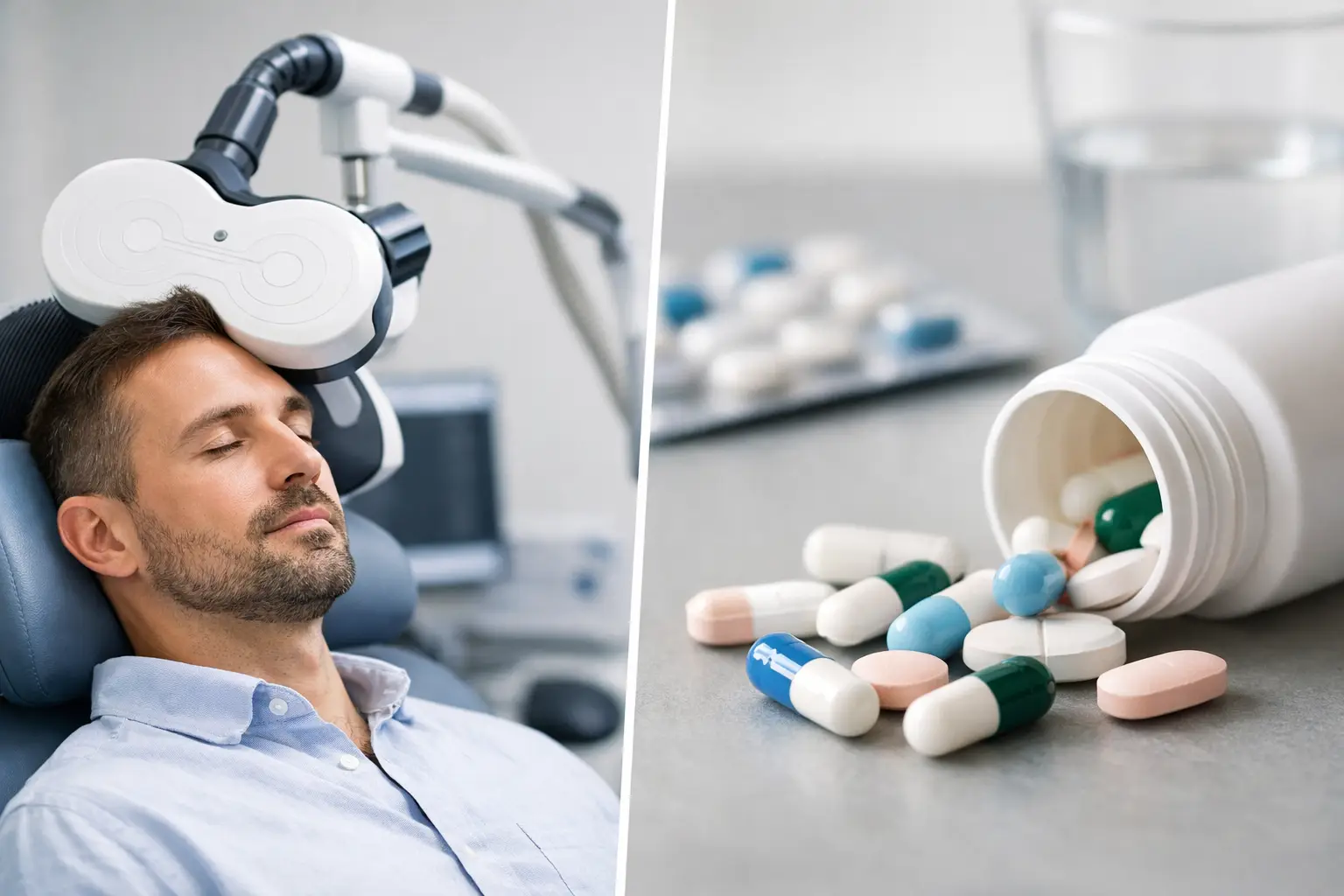
When depression is making it hard to get through the day, the question usually is not which treatment sounds best on paper. It is which one has the best chance of helping you feel like yourself again. For many people weighing tms vs antidepressant medication, the real concern is practical: how fast relief might come, what side effects to expect, and what happens if the first option does not work.
Both treatments can be effective. Both have a place in depression care. And neither is a one-size-fits-all answer. The right choice depends on your symptoms, medical history, past treatment response, daily schedule, and how comfortable you feel with each approach.
TMS vs antidepressant medication: the basic difference
Antidepressant medication works through the bloodstream and affects brain chemistry throughout the body. It is often prescribed as a first-line treatment for depression because it is widely available, familiar to most patients, and can also help with related symptoms such as anxiety.
TMS, or Transcranial Magnetic Stimulation, is different. It is a non-invasive treatment that uses targeted magnetic pulses to stimulate areas of the brain involved in mood regulation. TMS does not require anesthesia, does not involve surgery, and does not circulate through the body the way medication does.
That difference matters. If you are sensitive to medication side effects, have not improved after trying antidepressants, or want to consider a treatment with a different mechanism, TMS may be worth discussing with a psychiatric provider.
How antidepressant medication fits into treatment
For many patients, medication is a reasonable place to start. Antidepressants can reduce persistent sadness, low motivation, hopelessness, irritability, changes in sleep, and difficulty concentrating. Some people notice meaningful improvement within a few weeks, while for others the process is slower and may require dose adjustments or trying more than one medication.
Medication can also be easier to access quickly. A psychiatric evaluation can determine whether it fits your needs, and follow-up visits can be done in person or through telehealth in many cases. That convenience is one reason medication remains such a common part of outpatient mental health care.
Still, medication has trade-offs. Side effects vary by person and by drug, but common concerns include nausea, headaches, sleep changes, emotional blunting, sexual side effects, weight changes, and feeling worse before feeling better. Some people tolerate medication well. Others stop because the benefits do not outweigh the drawbacks.
Another challenge is unpredictability. Antidepressants help many people, but there is no perfect way to know in advance which medication will work best for a specific patient. It can take time, patience, and careful monitoring.
How TMS works and who may benefit
TMS is most often considered for major depressive disorder, especially when previous medication trials have not led to enough improvement. During treatment, a device is placed against the scalp to deliver magnetic pulses to targeted brain regions. Sessions are done in an outpatient setting, and patients are able to return to normal activities afterward.
Unlike medication, TMS does not rely on a daily pill. Instead, it is delivered on a structured schedule over several weeks. That schedule can feel like a commitment, but some patients prefer it because it avoids the systemic side effects often associated with antidepressants.
The most common side effects of TMS are usually mild and local, such as scalp discomfort or headache during or after sessions. Serious side effects are uncommon, though a provider should still review your medical history carefully to confirm whether TMS is appropriate.
TMS can be especially appealing for patients who have tried one or more antidepressants without enough relief, or for those who want a non-drug option as part of a broader treatment plan. It is not necessarily the first recommendation for everyone, but it can be an important next step when depression has been stubborn.
TMS vs antidepressant medication for effectiveness
This is where nuance matters most. Antidepressants can be highly effective, especially for mild to moderate depression and for people who respond well to the first or second medication they try. They are also often part of treatment when depression appears alongside anxiety, panic symptoms, or certain trauma-related concerns.
TMS has shown strong results for patients with treatment-resistant depression, meaning depression that has not improved enough with medication. In that setting, TMS may offer hope when someone feels stuck or discouraged by prior treatment attempts. Some patients experience significant symptom reduction, and some reach remission.
That said, effectiveness is not just about research averages. It is about fit. A treatment can work well statistically and still be the wrong match for a person whose side effects are unmanageable, who cannot maintain the schedule, or who has a history suggesting another approach may be better.
Side effects, safety, and day-to-day life
When comparing tms vs antidepressant medication, lifestyle impact is often just as important as symptom relief. Medication is generally easy to take, but side effects can affect energy, sleep, appetite, focus, and intimacy. Some people are comfortable managing that. Others find those changes disruptive.
TMS usually does not cause the same whole-body side effects because it is targeted rather than systemic. For patients concerned about sedation, sexual side effects, or weight gain, that can be a meaningful advantage. The trade-off is time. TMS requires repeated office visits over several weeks, so transportation, work schedule, school, and family responsibilities all need to be considered.
This is one reason personalized care matters. A treatment plan should fit your life, not just your diagnosis.
When medication may make more sense
Medication may be the better starting point if you are new to depression treatment, want an option that is widely available, or have symptoms that may respond well to a carefully selected antidepressant. It can also make sense if scheduling frequent in-office TMS sessions would be difficult right now.
In some cases, medication is used alongside therapy to create a broader support plan. If depression is connected with anxiety, trauma, stress, or family strain, combining medication with counseling may help address both symptoms and the patterns that keep them going.
When TMS may make more sense
TMS may be worth stronger consideration if you have tried antidepressants in the past and either did not improve enough or struggled with side effects that made continued use difficult. It may also be a good fit if you want an evidence-based, non-invasive treatment that does not involve taking medication every day.
Patients who feel frustrated after multiple medication changes often appreciate that TMS offers a different pathway rather than another variation of the same process. That emotional relief matters too. Hope can be hard to hold onto when several treatments have already fallen short.
Sometimes the best answer is not either-or
One of the most common misunderstandings about depression treatment is the idea that you must choose a single solution. In reality, some patients do best with therapy and medication. Others benefit from TMS plus ongoing psychiatric care and counseling. Some taper medication later under medical supervision, while others continue both because the combination gives them the most stable results.
At a practice like Strategies for Success, that coordinated model can be especially helpful because patients do not have to piece together care on their own. When therapy, psychiatry, and advanced treatment options are part of one system, it is easier to build a plan around the whole person instead of one symptom at a time.
What to ask before deciding
A good treatment conversation should cover more than whether a treatment works in general. It should also explore your depression history, whether you have tried medication before, what side effects you are worried about, whether anxiety or trauma are also present, and what kind of schedule you can realistically maintain.
You may also want to ask how progress will be measured, how long it typically takes to know whether treatment is helping, and what the next step would be if symptoms do not improve enough. These questions can make the decision feel less overwhelming and more grounded.
Choosing between TMS and antidepressant medication is rarely about picking the “better” treatment. It is about finding the treatment path that best matches your needs, your body, and your life right now. If depression has been persistent, there is value in having more than one option – and in working with a team that takes the time to personalize the next step.