
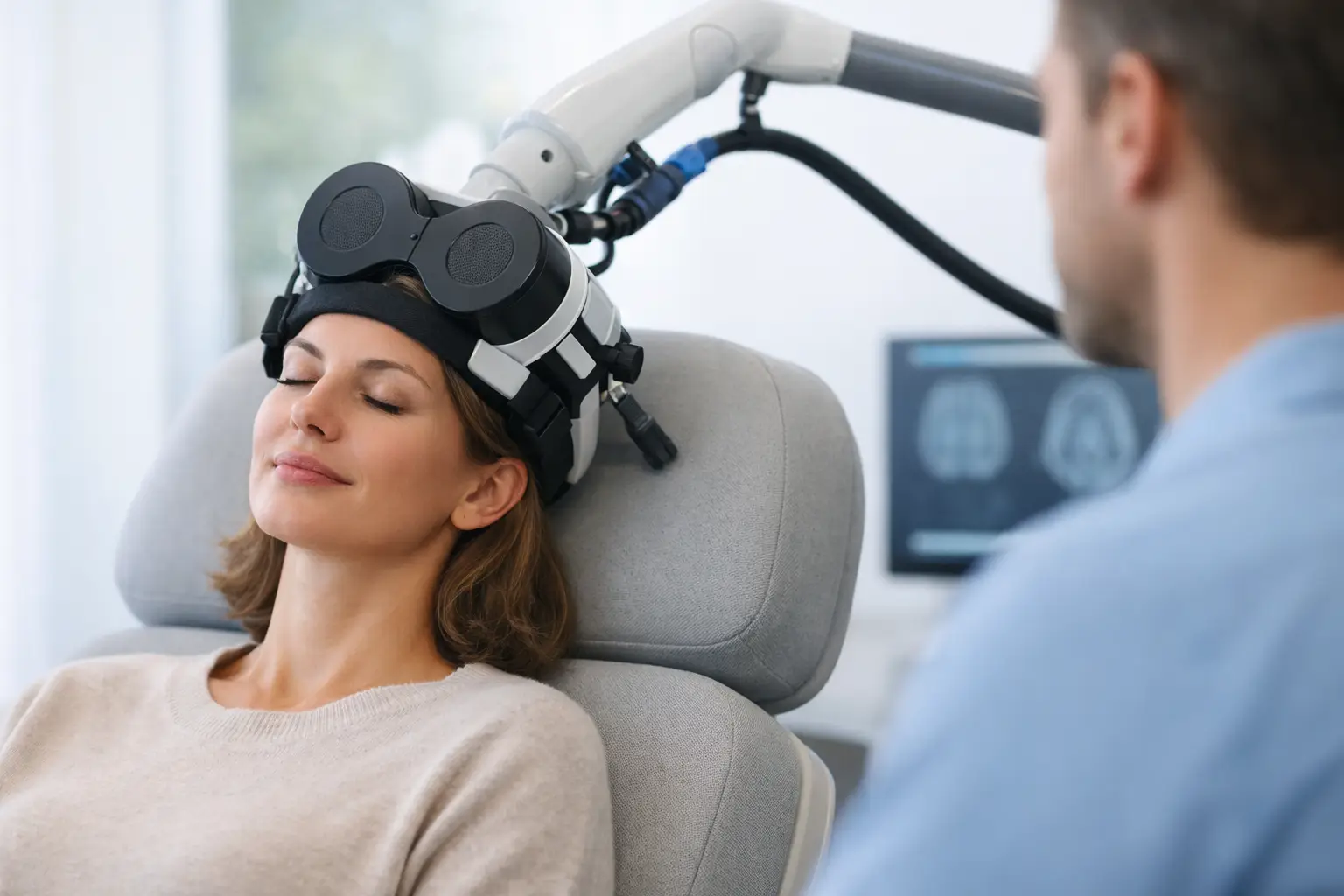
The first TMS appointment can feel unfamiliar, especially when depression has already asked so much of you. If you are wondering what does TMS feel like, most people describe a brief, repetitive tapping or knocking sensation against the scalp while they remain awake, seated, and able to talk with their treatment team.
Transcranial Magnetic Stimulation, often called TMS, is a noninvasive treatment that uses targeted magnetic pulses to stimulate areas of the brain involved in mood regulation. It is commonly considered for people with depression who have not found enough relief from medication, therapy, or a combination of both. Your experience is personal, but knowing what to expect can make the first session feel much more manageable.
What Does TMS Feel Like at Your First Appointment?
Your first appointment is usually longer than future visits because your provider needs to personalize the treatment. You will sit comfortably in a specialized chair while a trained TMS technician and prescribing clinician identify the placement and settings that are appropriate for you.
A small treatment coil rests against your head, usually near the front-left area of the scalp for standard depression protocols. When the pulses begin, you may feel a light-to-firm tapping, clicking, or pecking sensation. Some people compare it to a woodpecker gently tapping in one spot. The machine also makes a distinct clicking sound, so earplugs are typically provided for comfort and hearing protection.
During the initial mapping process, the provider may deliver pulses to a different area of your head to identify your motor threshold. You might notice your thumb, fingers, or hand twitch briefly. This is expected and helps the team determine the lowest effective treatment intensity for your individual nervous system. It is not an electrical shock, and you do not need to do anything to make it happen.
The settings are then adjusted carefully. If the tapping feels too sharp, pinchy, or uncomfortable, say so right away. Small changes in coil position, angle, intensity, or cushioning can often make a meaningful difference.
Sensations During a Typical TMS Session
Once your treatment plan is established, many TMS sessions follow a predictable routine. You arrive, get settled in the chair, and the technician positions the coil using the measurements from your first appointment. Depending on the protocol prescribed, treatment may take anywhere from a few minutes to around 20 minutes or longer.
The pulses come in short bursts, with pauses between them. During those bursts, common sensations include:
- Repetitive tapping or knocking on the scalp
- Tightening or small twitches in the forehead, eyebrow, jaw, or facial muscles
- Mild pressure where the coil touches the head
- A temporary sensitivity in the scalp during or shortly after treatment
Most people remain fully alert and can hold a conversation between pulse trains, listen to the technician, or simply rest. There is no sedation, no needles, and no need for anesthesia. That also means you can usually return to your normal activities, including driving, work, school, or family responsibilities, after the appointment unless your provider gives you different guidance.
The sensation often becomes more familiar after several sessions. What feels startling on day one may simply become a recognizable rhythm by the end of the first week. Still, familiarity should not mean pushing through pain. Treatment should be tolerable, and your care team should know if it is not.
Does TMS Hurt?
For many patients, TMS is uncomfortable at first rather than painful. Scalp nerves and facial muscles can be sensitive to the magnetic pulses, particularly as treatment intensity is gradually increased toward the prescribed level. A person with a history of headaches, jaw tension, migraine, or scalp sensitivity may notice the treatment more strongly.
Pain is not the goal and should not be dismissed as something you have to endure. Let the technician know whether the feeling is mildly annoying, increasingly uncomfortable, or painful. Describing the location and quality of the sensation helps the team make practical adjustments. For example, a twitch near the eye or jaw may improve when the coil is shifted slightly.
Some people experience a mild headache after a session, particularly early in the course of treatment. It often improves with hydration, a meal, rest, or an over-the-counter pain reliever if that medication is safe for you. Your provider can offer guidance based on your medical history and current medications.
What TMS Does Not Feel Like
TMS is sometimes confused with electroconvulsive therapy, or ECT, but the experiences are very different. TMS does not intentionally cause a seizure, does not require anesthesia, and does not involve placing electrical current through the brain. You stay awake throughout the appointment and are able to communicate with the team.
It also is not the same as immediately feeling happier or energized after one session. TMS works through a course of treatment, and improvement is usually gradual. Some people first notice that they are sleeping a little better, getting out of bed with less effort, or feeling more able to participate in therapy. Others notice changes in mood, motivation, concentration, or daily functioning later in the process. The timeline varies.
You may also have mixed emotions about starting. Relief, skepticism, hope, nervousness, and fatigue can all show up at the same time. Those feelings do not mean TMS will or will not work for you. They are simply part of considering a new step in your care.
How You May Feel After TMS
Most people leave a TMS appointment feeling much like they did when they arrived. A few feel temporary scalp tenderness, a mild headache, or fatigue. Others feel alert and ready to continue their day. There is no single “right” reaction after a session.
Mood changes are also not always linear. Depression symptoms can improve in small increments, and difficult days may still occur during treatment. Your provider may ask about sleep, mood, anxiety, energy, medication changes, alcohol or substance use, and side effects throughout the course. Honest answers help them monitor your progress and coordinate TMS with therapy, psychiatric care, and other supports.
Call your treatment team promptly if you experience a severe or unusual headache, significant changes in mood or behavior, symptoms that concern you, or anything that feels different from the effects you were told to expect. Before treatment begins, your provider will also review safety considerations, including your medical history, medications, and any implanted or embedded metal near the head.
Making TMS Feel More Comfortable
A few simple habits can make appointments easier. Arrive with enough time that you do not feel rushed. Eat and hydrate as you normally would, unless your clinician advises otherwise. Wear comfortable clothing, and let the team know if you have had poor sleep, a migraine, medication changes, or a higher-than-usual level of anxiety that day.
It can also help to approach the first week with curiosity rather than pressure. You do not have to prove that you can tolerate treatment, and you do not have to know exactly how you feel about it immediately. Your job is to communicate. Your care team’s job is to listen, adjust when appropriate, and keep the treatment plan centered on your safety and goals.
For people receiving care in Chandler, Gilbert, Mesa, Phoenix, or nearby Arizona communities, TMS can be part of a broader plan that includes medication management and evidence-based therapy. That coordination matters because depression rarely affects just one part of life. A personalized plan can address symptoms while also supporting the routines, relationships, and coping skills that help sustain progress.
The most useful question is not whether TMS feels identical for every person. It is whether the experience is manageable, monitored, and aligned with a treatment plan built around you. If you are considering TMS, a thoughtful conversation with an experienced mental health provider can replace uncertainty with clear, practical next steps.