
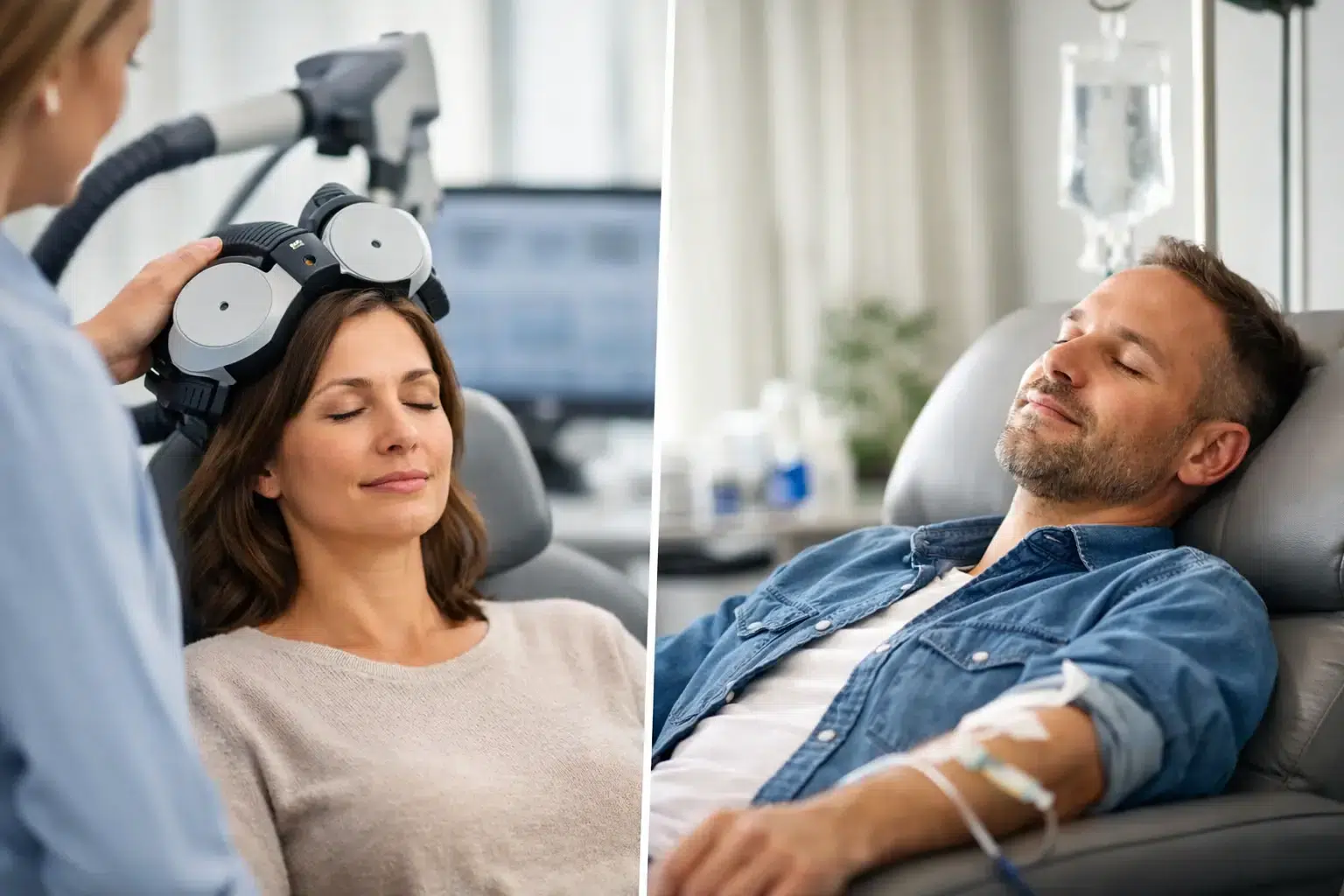
When medication has not brought enough relief, the decision can feel deeply personal: TMS versus ketamine for depression is not simply a choice between two newer treatments. Each has a different schedule, experience, safety profile, and role in a personalized treatment plan. The right option depends on your symptoms, treatment history, medical needs, daily responsibilities, and preferences.
For many people, the most encouraging part is that depression treatment does not have to stop when a first or second medication falls short. There are evidence-based next steps, and an experienced mental health provider can help you consider them without pressure or one-size-fits-all recommendations.
TMS Versus Ketamine for Depression: The Core Difference
Transcranial Magnetic Stimulation, or TMS, is a noninvasive treatment that uses focused magnetic pulses to stimulate areas of the brain involved in mood regulation. During treatment, you remain awake and seated in a comfortable clinical setting. There is no anesthesia, no sedation, and no recovery period that prevents you from driving or returning to many usual activities.
Ketamine-based treatment works differently. Ketamine is a medication that can affect glutamate pathways in the brain. Intravenous ketamine is sometimes used off-label for depression. Esketamine, a nasal spray medication often known by its brand name Spravato, is FDA-approved for certain adults with treatment-resistant depression and for depressive symptoms in adults with acute suicidal ideation or behavior, when used with an oral antidepressant.
The key distinction is straightforward: TMS uses magnetic stimulation over a series of appointments, while ketamine or esketamine involves medication that may produce more immediate changes in mood for some people. Neither approach is automatically better. They address depression through different mechanisms and suit different clinical circumstances.
How TMS Treatment Usually Feels
A TMS course is commonly delivered five days a week for several weeks, although the exact protocol can vary. Individual appointments often last between 20 and 40 minutes, depending on the type of TMS protocol your provider recommends. Improvement tends to build over time rather than appear after one visit.
During a session, you may feel tapping on your scalp and hear clicking sounds from the device. The most common side effects are scalp discomfort and headache, particularly early in treatment. These effects are usually temporary and can often be managed by adjusting the settings or using simple comfort measures.
TMS may be a strong fit for a person who wants a medication-free interventional treatment, needs to stay alert for work or parenting responsibilities, or has struggled with antidepressant side effects. It can also be appealing to people who prefer a structured, predictable schedule and want regular contact with a care team during treatment.
TMS is not appropriate for everyone. Certain metal or electronic implants near the head, a history of seizures, and other medical factors require careful review. A consultation should include a full medical and psychiatric history, not just a discussion of depressive symptoms.
What research suggests about TMS
TMS has been cleared by the FDA for major depressive disorder and has a substantial body of research supporting its use, especially when antidepressant medication has not provided adequate benefit. Clinical outcomes vary, but many patients experience meaningful symptom improvement, and some achieve remission. The odds of improvement are influenced by factors such as prior treatment history, the severity and duration of depression, and whether TMS is combined with psychotherapy and medication management when appropriate.
How Ketamine and Esketamine Treatment Usually Feel
Ketamine-based treatment may be considered when depression is severe, persistent, or has not responded sufficiently to standard approaches. Some people report a shift in mood, hopelessness, or emotional intensity more quickly than they have with traditional antidepressants. That potential for faster relief is one reason ketamine has received so much attention.
But fast does not mean simple. Ketamine treatment requires close medical oversight. With esketamine nasal spray, patients are monitored in a certified clinical setting for at least two hours after administration because temporary sedation, dissociation, and increases in blood pressure can occur. You cannot drive yourself home after treatment.
Dissociation can feel like being detached from your thoughts, body, or surroundings. Some people find it unsettling; others tolerate it well when they know what to expect and are supported by trained staff. Nausea, dizziness, sleepiness, and changes in perception may also occur. Ketamine can carry misuse risks, so an honest conversation about current or past substance use is essential.
Intravenous ketamine and esketamine are not interchangeable. They differ in FDA approval status, delivery method, monitoring requirements, availability, and insurance coverage. A provider can explain which, if either, is medically appropriate for your situation.
Which Treatment May Fit Your Needs?
The decision often comes down to the pattern of your depression and the practical realities of your life. TMS may make more sense when you can attend frequent weekday appointments and want to avoid the dissociative effects and driving restrictions associated with ketamine-based care. It is also often considered after multiple medication trials have not delivered adequate relief.
Ketamine or esketamine may deserve discussion when rapid symptom relief is a major clinical priority, when previous treatments have been unsuccessful, or when a prescriber believes its potential benefits outweigh its risks. Because the experience can be more intense on treatment days, it may be less convenient for someone without reliable transportation or flexibility afterward.
For both options, treatment works best as part of a coordinated plan. Depression can affect sleep, relationships, work, physical health, trauma responses, and self-confidence. Therapy can help a person build coping skills and address underlying patterns while medication management, when indicated, supports ongoing symptom stability. Interventional treatment is not a replacement for compassionate, comprehensive care. It can be one important part of it.
A note about bipolar depression, anxiety, and trauma
Depression rarely exists in isolation. Anxiety, PTSD, trauma, ADHD, substance use concerns, and bipolar disorder can affect which treatment is safest and most likely to help. For example, people with bipolar disorder need careful assessment for current or past mania or hypomania before changes are made to depression treatment. Ketamine and TMS may still be considered in some circumstances, but treatment planning should be individualized and closely monitored.
This is why a thorough evaluation matters. A provider should ask about past medications, therapy history, mood changes, sleep, substance use, medical conditions, and what you hope will be different in your day-to-day life.
Questions to Ask Before Choosing TMS or Ketamine
A productive consultation is not about proving that you have “failed” other treatments. It is about understanding what you have tried and what support may help now. Consider asking how many appointments are involved, when improvement might reasonably be expected, what side effects are most relevant to you, and how progress will be measured.
It is also appropriate to ask about cost and insurance before starting. TMS is covered by many insurance plans when clinical criteria are met, often after documented trials of antidepressant medication. Esketamine coverage may also be available in qualifying cases, while intravenous ketamine is more often an out-of-pocket expense. Coverage rules vary by plan, diagnosis, treatment history, and authorization requirements.
At Strategies for Success, an integrated approach can make these conversations easier. Your care team can consider therapy, psychiatric care, medication management, and TMS in the context of your full treatment history, rather than viewing one service as the only answer.
Choosing a Path That Feels Sustainable
The best treatment is not always the one with the most dramatic story or the quickest promise. It is the option that is clinically appropriate, realistically accessible, and supported by a plan for what happens between appointments and after the treatment course ends.
If you are having thoughts of harming yourself or feel unable to stay safe, call or text 988 for the Suicide & Crisis Lifeline, call 911, or go to the nearest emergency room. For ongoing depression that has not improved enough, a thoughtful evaluation can turn uncertainty into a clear next step – one built around your needs, your safety, and your hope for feeling better.