
When depression has not improved enough with medication, or when medication side effects make daily life harder, it can be frustrating to hear that there are still options without knowing what they involve. This TMS therapy for depression review offers a clear look at how treatment works, who it may help, and what a realistic treatment experience can look like.
What TMS Therapy Is and Is Not
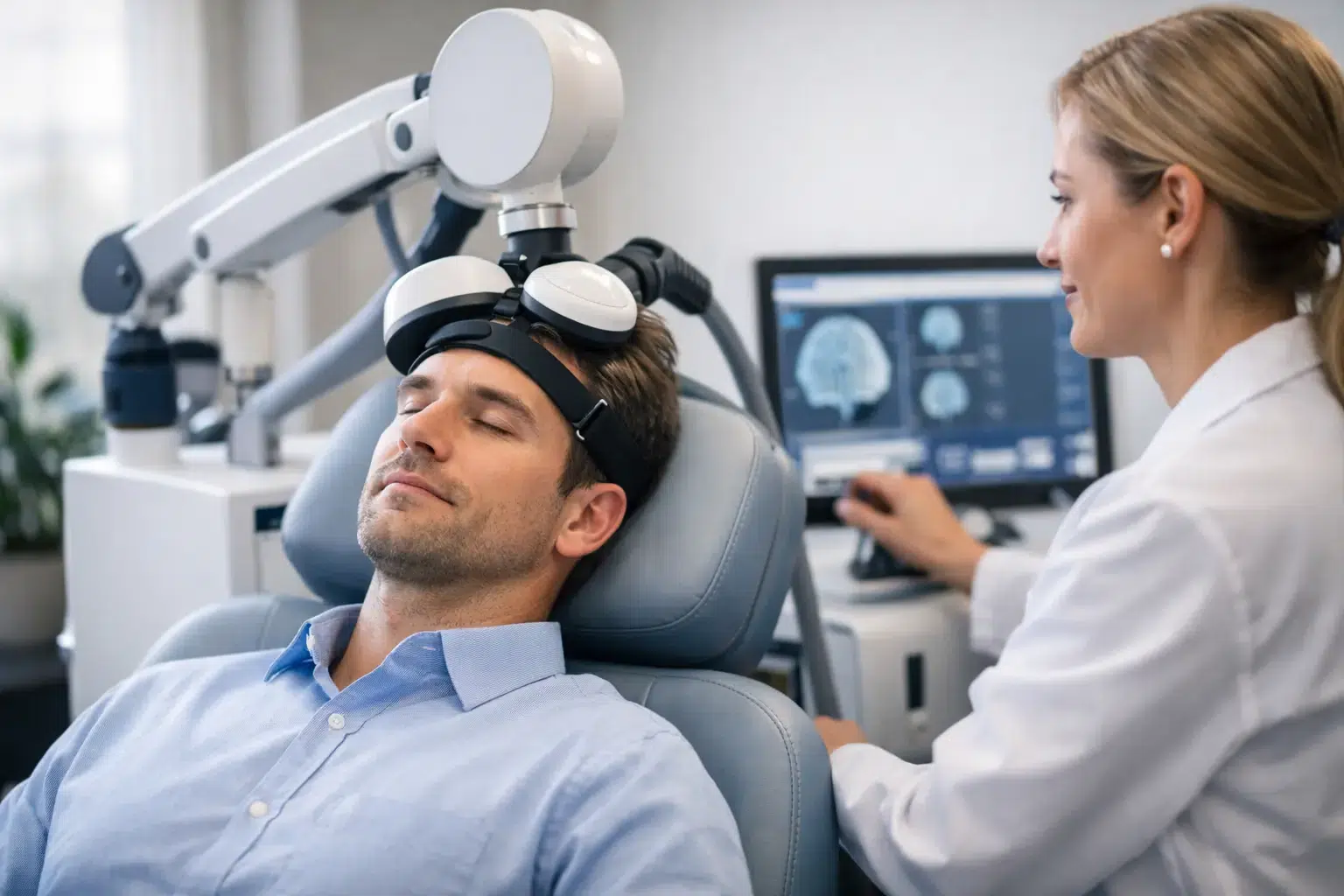
Transcranial Magnetic Stimulation, or TMS, is a noninvasive treatment that uses focused magnetic pulses to stimulate areas of the brain involved in mood regulation. During a session, a provider places a treatment coil against the scalp. The coil delivers brief pulses while the patient remains awake, alert, and able to return to normal activities afterward.
TMS is not electroconvulsive therapy, commonly called ECT. It does not require anesthesia, does not intentionally cause a seizure, and does not involve electrical current passing through the body. The treatment can feel unfamiliar at first, but many patients describe the sensation as tapping or knocking on the scalp.
For adults with major depressive disorder, TMS is an FDA-cleared treatment option. It is often considered when depression has not responded adequately to antidepressant medication and psychotherapy, although the right timing depends on a person’s clinical history, symptoms, insurance requirements, and preferences.
TMS Therapy for Depression Review: Potential Benefits
The strongest reason to consider TMS is simple: depression can persist even when someone is doing everything they have been asked to do. A person may have tried more than one medication, attended therapy consistently, worked on sleep and routines, and still feel emotionally flat, hopeless, exhausted, or unable to experience relief.
TMS offers a different treatment approach. Rather than adding another systemic medication, it targets specific brain networks associated with depression. For some people, this makes TMS especially appealing when antidepressants have caused unwanted effects such as weight changes, sexual side effects, fatigue, or emotional blunting.
A positive TMS experience is not always dramatic or immediate. Some patients first notice subtle shifts: getting out of bed feels more manageable, concentration improves, or difficult emotions feel less consuming. Others report a more substantial reduction in depressive symptoms over the course of treatment. Not everyone responds, and some people need additional treatment afterward, but meaningful improvement is possible for patients with treatment-resistant depression.
TMS can also work well as part of a broader care plan. Depression rarely exists in isolation. Anxiety, trauma, relationship stress, grief, substance use concerns, sleep disruption, and ADHD can all influence recovery. Combining TMS with psychiatric follow-up and evidence-based therapy can help address both the symptoms of depression and the life circumstances that may continue to affect mental health.
What Treatment Usually Feels Like
Before treatment begins, a qualified provider completes an evaluation to confirm whether TMS is appropriate. This includes reviewing depression symptoms, past medications, therapy history, medical conditions, and any factors that could affect safety. The first treatment appointment also involves mapping, which helps determine the appropriate location and pulse intensity for the individual patient.
Most TMS treatment plans involve brief weekday appointments over several weeks. The exact schedule, session length, and number of treatments vary by protocol and clinical need. The consistency can be a commitment, especially for patients balancing work, parenting, school, or transportation. Still, sessions are typically completed in an outpatient setting, and there is generally no recovery period afterward.
During treatment, patients are awake and can communicate with the care team. Some clinics allow quiet conversation, music, or other low-key activities, depending on the protocol. The sensation may be uncomfortable during the first few appointments, particularly around the forehead or scalp, but the provider can make adjustments when appropriate. Many patients find that the experience becomes easier as they get used to it.
Side Effects and Safety Considerations
Like any medical treatment, TMS has potential side effects. The most common are temporary scalp discomfort or headache during or shortly after treatment. Some people experience facial muscle twitching during pulses, which usually stops when the pulse ends. These effects are often manageable and may lessen over time.
A seizure is a rare but serious risk. That is why a careful assessment matters. Patients should tell their provider about a history of seizures, brain injury, implanted metal or electronic devices near the head, medications, substance use, and major changes in sleep. Honest, detailed information helps the team create the safest possible treatment plan.
TMS may not be the best fit for every person with depression. People experiencing mania, psychosis, active substance withdrawal, or an immediate safety crisis may need other forms of care first or alongside TMS. If someone is having thoughts of self-harm or feels unable to stay safe, urgent support should take priority. Contact 988, call 911, or go to the nearest emergency department for immediate help.
Who May Be a Good Candidate?
TMS is often discussed for adults with major depressive disorder who have had limited improvement after antidepressant treatment. “Limited improvement” does not mean treatment failed because the patient did something wrong. Depression can be complex, and medication response differs widely from one person to another.
A good candidate is usually someone who can attend regular appointments, has no contraindications identified during screening, and is willing to stay engaged with the broader treatment plan. TMS may be particularly worth discussing if medication has only partially helped, if side effects have become difficult to tolerate, or if depression keeps returning despite prior care.
The decision is more nuanced for people with bipolar disorder, PTSD, anxiety disorders, or other co-occurring conditions. TMS may still be considered in certain situations, but it should be guided by a psychiatric evaluation rather than an online checklist. The goal is not to fit someone into a standard protocol. It is to select treatment that fits their diagnosis, history, symptoms, and goals.
Questions to Ask Before Starting TMS
A consultation should leave you with a practical understanding of what comes next. Ask how the provider determines candidacy, which TMS protocol they recommend, how often you will need to attend, and how progress will be measured. It is also reasonable to ask what happens if symptoms do not improve as expected and whether therapy or medication management will continue during treatment.
Cost and coverage deserve a direct conversation as well. Many insurance plans may cover TMS when medical criteria are met, but authorizations and out-of-pocket responsibilities vary. Ask the practice to explain the verification process, required records of prior treatment, and estimated patient costs before committing to a schedule.
For Arizona patients, convenience can make a meaningful difference in completing a full course of care. Choosing a team that can coordinate TMS with therapy and psychiatric services can reduce the burden of managing separate providers and make it easier to adjust the plan as symptoms change.
A Personalized Next Step
TMS is not a quick fix, and it is not a replacement for every other form of depression treatment. It is a clinically supported option that may offer renewed hope when standard approaches have not provided enough relief. The most helpful review of TMS is not simply whether it worked for someone else, but whether it is safe, practical, and appropriate for your own circumstances.
At Strategies for Success, a thoughtful evaluation can help you understand your options within a coordinated plan that may include TMS, therapy, psychiatric care, or medication management. Taking the next step does not require having every answer. It starts with a conversation about what has been difficult, what you have already tried, and what meaningful improvement would look like for you.