
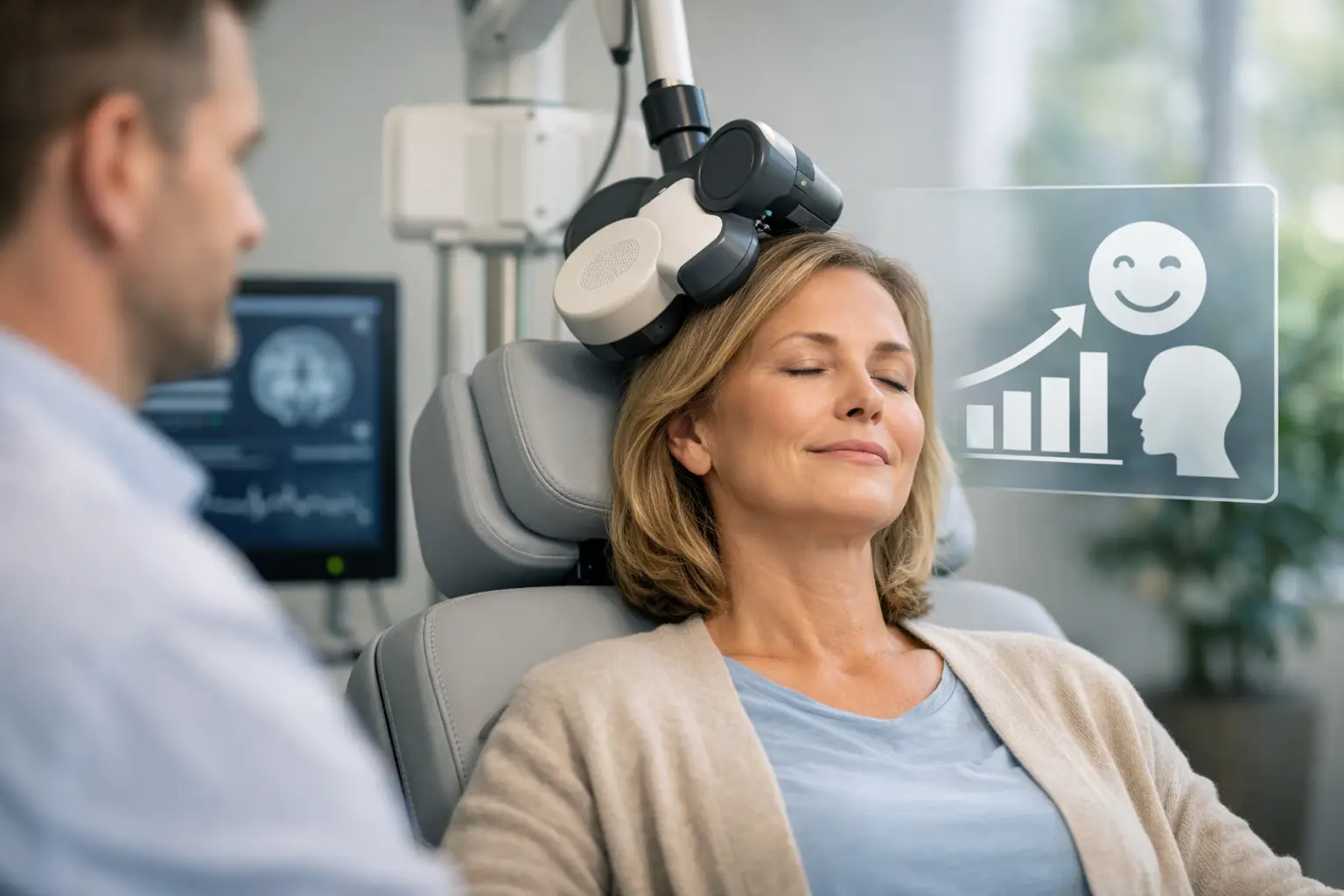
When depression keeps showing up despite medication, therapy, or both, the next question is usually not What is TMS? It is Will it actually help me? That is why conversations about tms therapy patient outcomes matter. People want honest expectations, a sense of timing, and a clear picture of what improvement can look like in real life.
TMS, or Transcranial Magnetic Stimulation, is often considered when symptoms have not responded well enough to antidepressants or when side effects from medication have made treatment harder to continue. It is a non-invasive treatment that uses magnetic pulses to stimulate specific areas of the brain involved in mood regulation. For many patients, the real value of TMS is not just that it is different. It is that it offers another evidence-based path forward when progress has stalled.
What tms therapy patient outcomes really mean
When clinicians talk about outcomes, they are not only asking whether symptoms disappear completely. They are looking at measurable changes in depression severity, daily functioning, sleep, concentration, energy, and quality of life. For some people, a strong outcome means remission, with symptoms dropping to the point that depression no longer drives day-to-day life. For others, it means meaningful relief that makes therapy, work, parenting, and relationships feel manageable again.
That distinction matters. TMS is not a guaranteed cure, and it does not work the same way for every person. Still, many patients experience significant symptom improvement, particularly those with major depressive disorder who have not had enough benefit from one or more antidepressant trials. Research has consistently shown that a substantial portion of patients improve with a full course of TMS, and some reach remission.
Outcomes are also broader than mood alone. Patients sometimes report that the first changes are more subtle than dramatic. They may sleep more consistently, feel less emotionally heavy in the morning, or notice they can complete tasks that had felt impossible a few weeks earlier. These shifts can be early signs that treatment is helping, even before someone says, I feel like myself again.
When improvement usually starts
One of the most common questions about TMS is how quickly it works. The honest answer is that it depends. Some patients notice changes within the first two weeks, while others do not feel meaningful relief until later in the treatment course. A standard course often involves sessions five days a week for several weeks, followed by a taper plan in some cases.
This timeline can feel frustrating, especially for someone who has already waited through medication adjustments, side effects, and lingering symptoms. But TMS tends to be a cumulative treatment. Each session builds on the last. Early improvement does not always predict the full result, and slower improvement does not mean the treatment has failed.
In practice, providers track outcomes across the full course rather than judging success too early. That is one reason regular clinical follow-up matters. If a patient is receiving TMS as part of a larger treatment plan, the team can monitor mood changes, function, sleep, anxiety, and any coexisting concerns along the way.
What affects TMS therapy patient outcomes
Several factors can shape outcomes, and this is where personalized care matters most. Diagnosis is one piece. TMS is best known for treatment-resistant depression, but individual symptom patterns still vary. Someone with severe low motivation and slowed thinking may respond differently than someone whose depression is closely tied to trauma, anxiety, or chronic stress.
Treatment history also matters. A person who has tried many medications without relief may still benefit from TMS, but their path may look different from someone who is earlier in treatment. Co-occurring conditions can influence progress as well. Anxiety, PTSD symptoms, substance use, sleep problems, and ADHD can all affect how a person experiences treatment and recovery.
Consistency is another major factor. Missing sessions can interrupt the cumulative effect of TMS. So can starting treatment without enough support around daily stressors, therapy follow-through, or medication management when those are still needed. TMS can be powerful, but it often works best as part of a coordinated plan rather than a stand-alone fix.
That integrated model can make a real difference. When patients have access to psychotherapy, psychiatry, and interventional care in one place, treatment decisions can be adjusted more efficiently. If someone begins to improve with TMS but still struggles with panic, trauma triggers, or family stress, the care plan can respond without starting over from scratch.
What successful outcomes can look like in daily life
Clinical scores matter, but most patients judge success by simpler questions. Can I get out of bed without dread? Can I focus at work? Can I be present with my kids? Can I stop feeling like every task takes more energy than I have?
A positive TMS outcome often shows up in these practical ways first. People may start engaging socially again. They may return to routines they had abandoned, such as exercise, household responsibilities, or hobbies. Family members may notice they sound more hopeful or less shut down. Therapy may become more productive because the patient has enough emotional energy to use the tools they are learning.
This is an important point for patients who are also in counseling. When depression is severe, even good therapy can feel hard to access emotionally. If TMS reduces the intensity of depressive symptoms, some patients find they can participate more fully in CBT, DBT-informed work, trauma treatment, or other evidence-based approaches. In that sense, improved outcomes are sometimes layered rather than isolated.
What TMS does not promise
Compassionate care includes honesty. TMS does not help every patient, and it does not remove the need for a thoughtful diagnosis. It also does not solve every contributor to emotional distress. If someone is living with ongoing trauma, high conflict at home, untreated anxiety, or substance use concerns, depression may improve while other symptoms still need direct care.
There is also the question of durability. Some patients maintain their gains for a long time after a successful course. Others need maintenance strategies, whether that means returning for additional TMS sessions later, continuing medication, staying engaged in therapy, or combining several supports. Needing ongoing care is not a sign of failure. Depression can be recurrent, and long-term management is often part of staying well.
Side effects are another part of the outcome conversation. TMS is generally well tolerated, especially compared with medications that can cause weight gain, sexual side effects, sedation, or emotional blunting. Still, some people experience scalp discomfort, headache, or jaw tension during treatment. These effects are often manageable, but they are worth discussing upfront so expectations are realistic.
Why a full evaluation matters before starting
Good outcomes begin before the first treatment session. A careful evaluation helps determine whether TMS is a strong fit, whether depression is the main target, and what other supports should stay in place. That includes reviewing prior medication trials, current symptoms, safety concerns, medical history, and co-occurring diagnoses.
This step can feel slower than patients want, especially when they are eager for relief. But it protects against oversimplifying a complex situation. A person with depression and trauma, for example, may benefit most from TMS plus therapy rather than TMS alone. Someone with medication side effects may need psychiatric follow-up during treatment. Someone struggling with transportation, work hours, or caregiving demands may need help planning for treatment consistency.
In a community-based outpatient setting, practical access can shape outcomes more than people expect. When care is available close to home, supported by insurance options, and coordinated across services, it becomes easier to complete treatment and maintain momentum. That may sound logistical, but for mental health care, logistics often determine what is actually possible.
How to think about success if you are considering TMS
A helpful way to approach TMS is to aim for both symptom relief and functional recovery. Ask not only whether depression scores may improve, but whether treatment could help you reconnect with your life. Think about your own markers of progress. Better sleep, fewer hopeless thoughts, less irritability, more reliable focus, and greater participation in therapy all count.
It also helps to enter treatment with a balanced mindset. Hope matters, and so do realistic expectations. TMS is supported by strong evidence, but no ethical provider should promise identical results for everyone. The better approach is individualized care, close monitoring, and a plan that adjusts based on how you respond.
At practices such as Strategies for Success, that kind of care can include psychotherapy, psychiatric support, and TMS within one coordinated system. For patients and families, that often means fewer gaps, clearer communication, and treatment that feels more personal.
If you are weighing TMS because medication has not done enough, the question is not whether your path should look like someone else’s. The better question is whether you have a care team willing to look closely at your symptoms, your history, and your goals, then help you build a treatment plan that gives improvement a real chance.